Have you ever wanted to have more places to add food to your homestead? Most of us think food should fit into nice straight rows. But what if there was a better way? What if you could grow it everywhere you looked? Have you thought about landscaping with edible plants?
I love to dream about going outside at all times of the year and finding food. From your front porch to your back patio, you can grow plants that can be food for yourself or your animals. I did a post a while back about planting a Food Forest. Why can’t we use that idea and cultivate food around the edges of our house?
Let’s Talk About Plants You Can Eat
You would be surprised by how many plants that look beautiful that you can actually eat. Did you know that you can eat Hosta’s, ferns and some flowers? Now, hostas and ferns taste the best early in the spring, and things like Nasturtiums and Calendula flowers usually aren’t available until the summer.
If you have ever heard of people who grow chaos gardens, the concept is this: you grow things all over the place, any place there is a place to put something. So, produce can be mixed in with the flower garden, and vice versa. Planting with edibles in your landscape can be a very creative process.
I plant using the companion planting theory in my veggie garden. Try to think about whether something is edible when you purchase it, such as Echinacea. You can make the leaves into tea or tinctures. Also, if you plant flowers interspersed with your veggies, you will attract more pollinators.
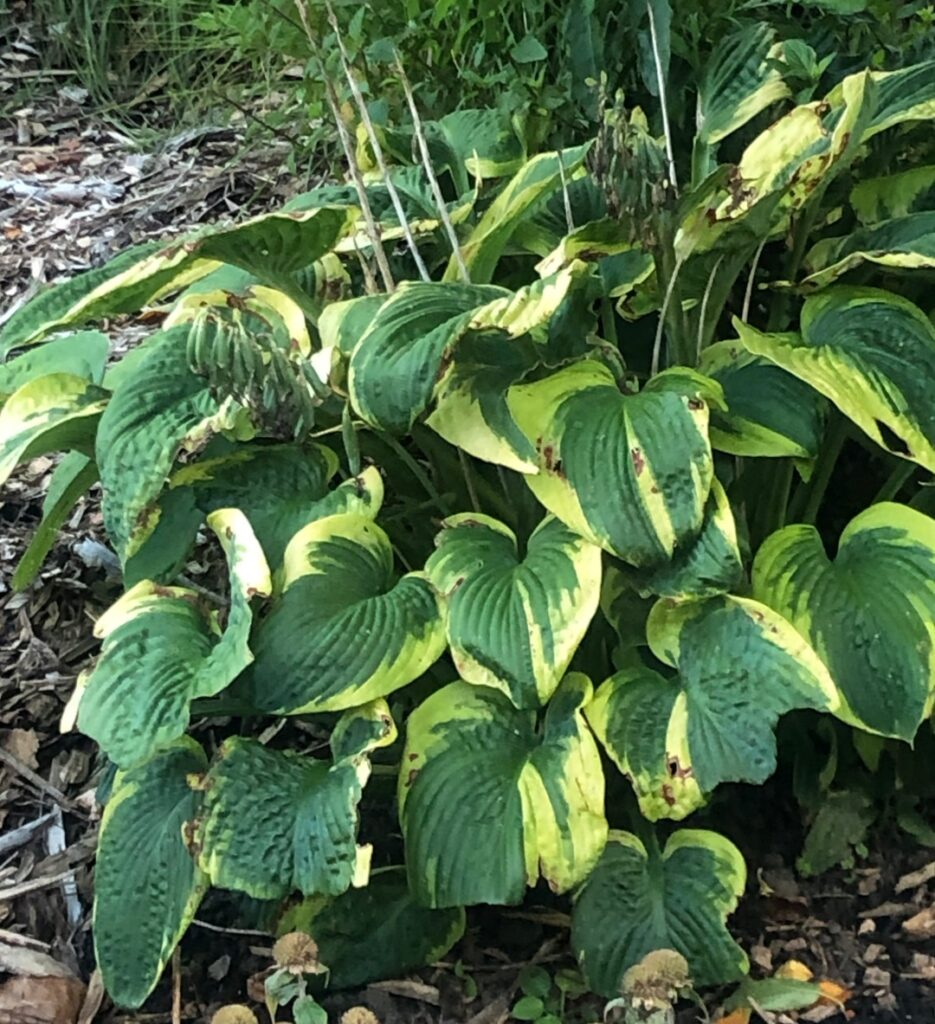
This hosta is one of the few that the wildlife that traipses through our yard hasn’t demolished. One of them that is more light in coloration only has the stems left. I don’t know if it is because our 8-year-old cat died or what. It is the first year in four years that something is eating my hostas. Lesson to learn: they must taste gooooood!
Flowering edibles in your Landscape
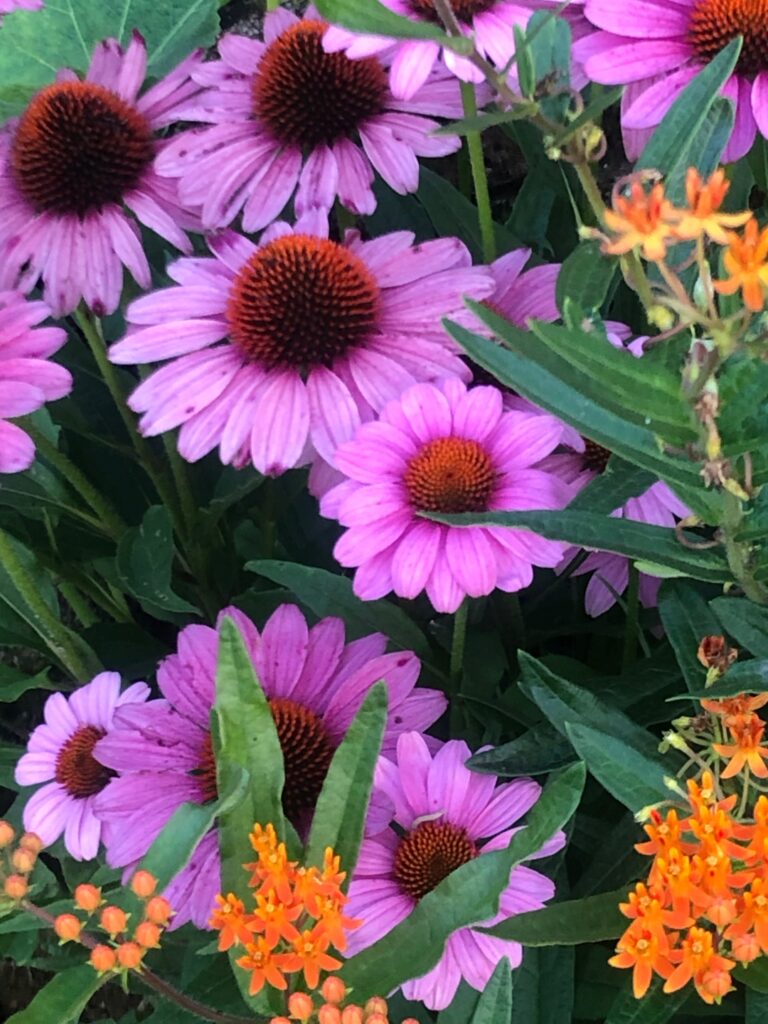
Purple Cone Flower (Echinacea) This is hardy, beautiful, and edible. What more can you ask? The petals and leaves can be made into teas, tinctures, and ground into a powder. It is good for your skin, and can have a positive effect on your mood.
You can cut it almost all the way to the ground in the middle of the summer, and then it will bloom again in the fall. Harvest the leaves, flowers, roots, and stems. Teas are made by using 1 T. fresh or 1 t. dried flowers and leaves in hot water for 5-7 minutes.
Rose The rose plant can be harvested for the rose hips in fall to winter. Edible landscapes can be beautiful and delicious at the same time.
Native Edibles
Some native species are edible, such as Yarrow, Native Sage, Wild Spinach, Lamb’s Quarters, Wood Sorrel, or Miner’s Lettuce.
Some flowering natives are Fireweed (Chamerion Angustifolium), Sunroot (Helianthus Tuberosus), Cut-leaf Coneflower (Rudebeckia Laciniata), and Common Violet (viola sororia), which most gardeners think of this as a weed. However, the flowers can be made into a jelly. Who knew?
Some other edibles to try are grapes, Groundnut (Apoios americana), American Paw Paw, Ostrich Fern(Matteuccia struthiopteris), Black Raspberry (Rubus occidentalis), and Wild Leek/Ramps (Allium trcoccum).
Herbs in your Landscape
Hyssop is edible and can spread slowly as it self-seeds, and can reduce erosion effectively. It can be used in cooking, in famous liqueurs like Chartreuse, and in teas (the leaf part of the plant). The young leaves can be added to salads, and the blooms and leaves enhance savory dishes.
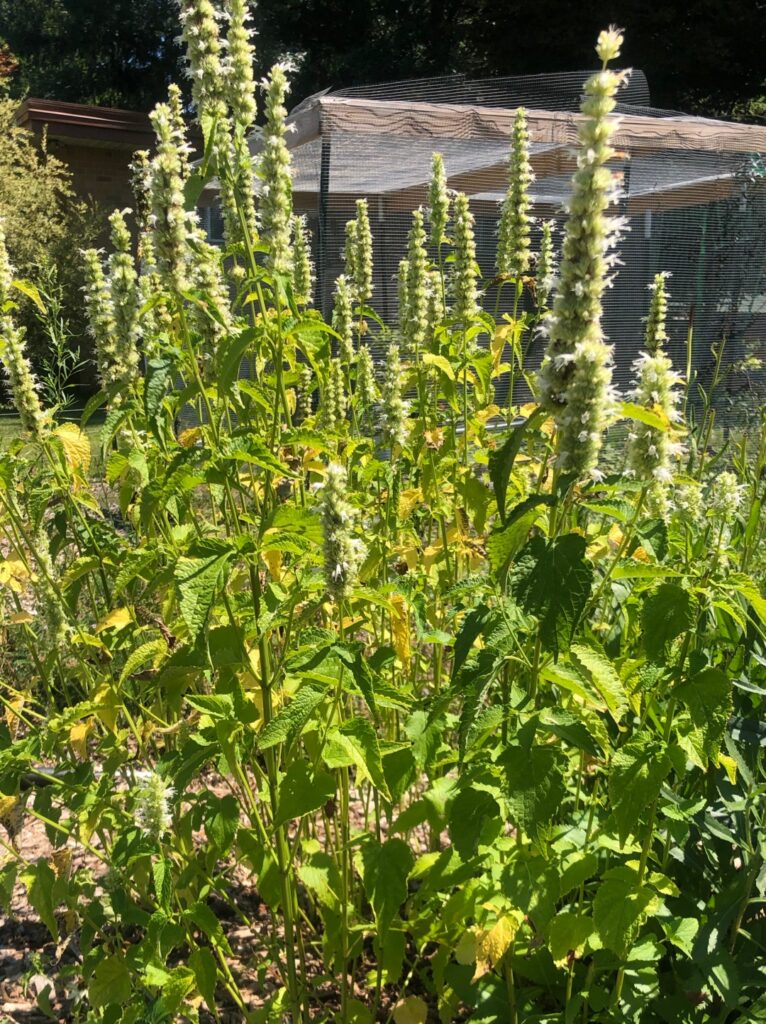
The herb is supportive for respiratory relief, sore throat relief, anti-inflammatory support, and also a digestive aid. Most people have a few herbs in their gardens, but if you add in some just for the native insects, then you will have more of the bad bugs controlled naturally.
Burdock is a herb for which every part of the plant can be eaten and used in some way or fashion. It isn’t that lovely of a plant and kind of looks like a thistle, but it is very beneficial.
This is a biennial, so it will grow for 2 years before dying, but it will self-seed, or you can cut the seed heads before they dry.
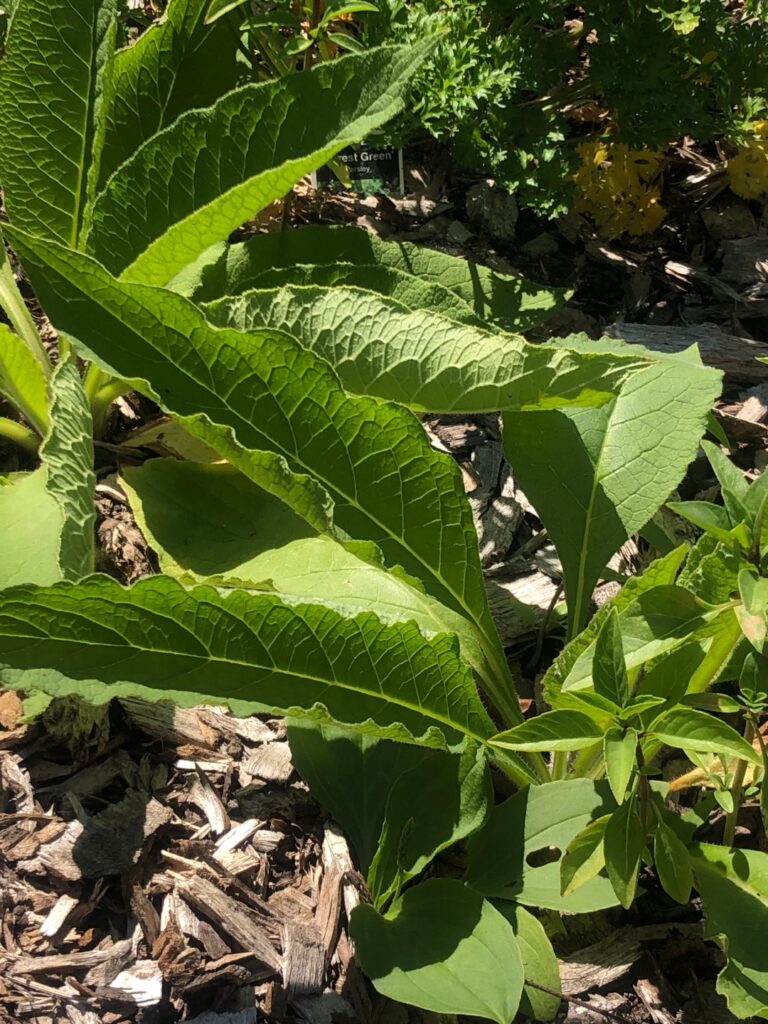
This is what Burdock looks like before it flowers.
Purple Basil is one of the herbs that isn’t perennial, but you can grow it anywhere, even amongst your flowers, and it will look amazing. If you aren’t interested in using it as food for the moment, you can let it go to seed, and you will have flowers too.
Calendula
Perennials to Try in your Garden
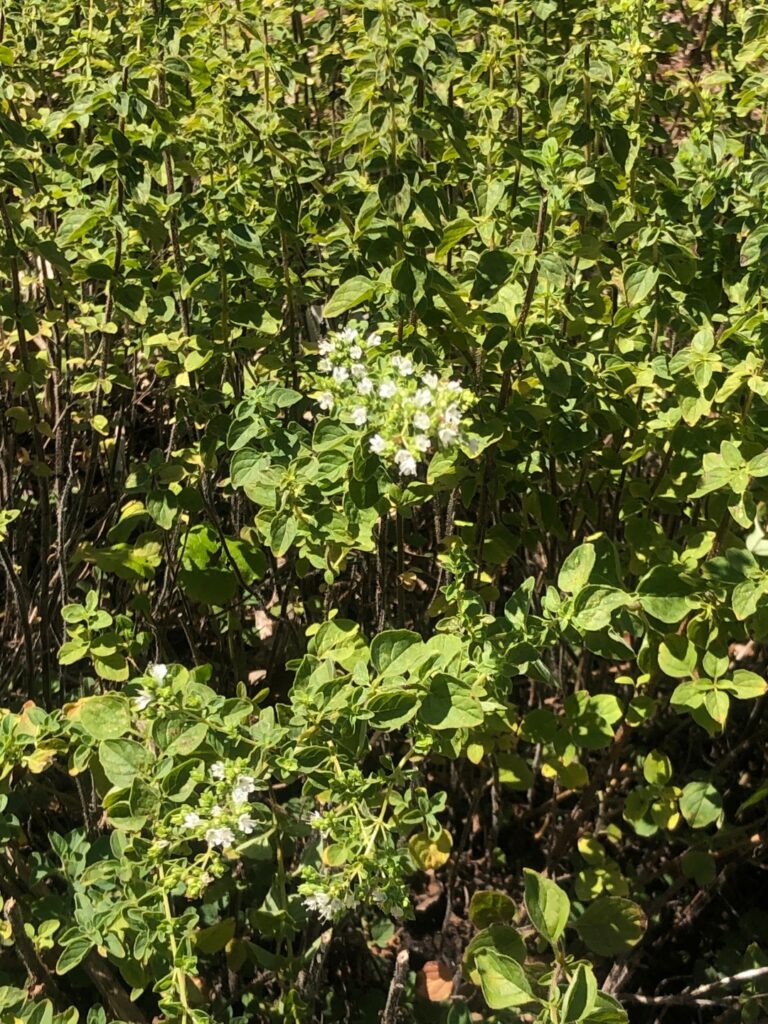
Thyme, Oregano, Parsely, Sunflowers, Borage, Bay Laurel are plants that will come back year after year. Sunflowers are also edible to the birds if you leave some to share and will self-seed if you do not till that area.
Berry bushes such as blueberry, elderberry, serviceberry, and raspberries will bring you fruit, and wildlife will be happy to eat what is left behind. You can also harvest early leaves of the raspberry for teas.
Nut trees might be more up your alley. They can provide shade as well as nourishment. Trees such as black walnut, pecan and hickory are native to Ohio and provide cooling shade, inviting you to enjoy your outdoor spaces.
Elderberry bushes grow fiercely and will become very tall. They are good for the immune system, heart health, and have been noted to possibly influence blood sugar levels, have cancer-fighting potential, protects and boosts skin health, support digestion, regularity, and kidney health. Wow! That’s a lot of good stuff from one plant.
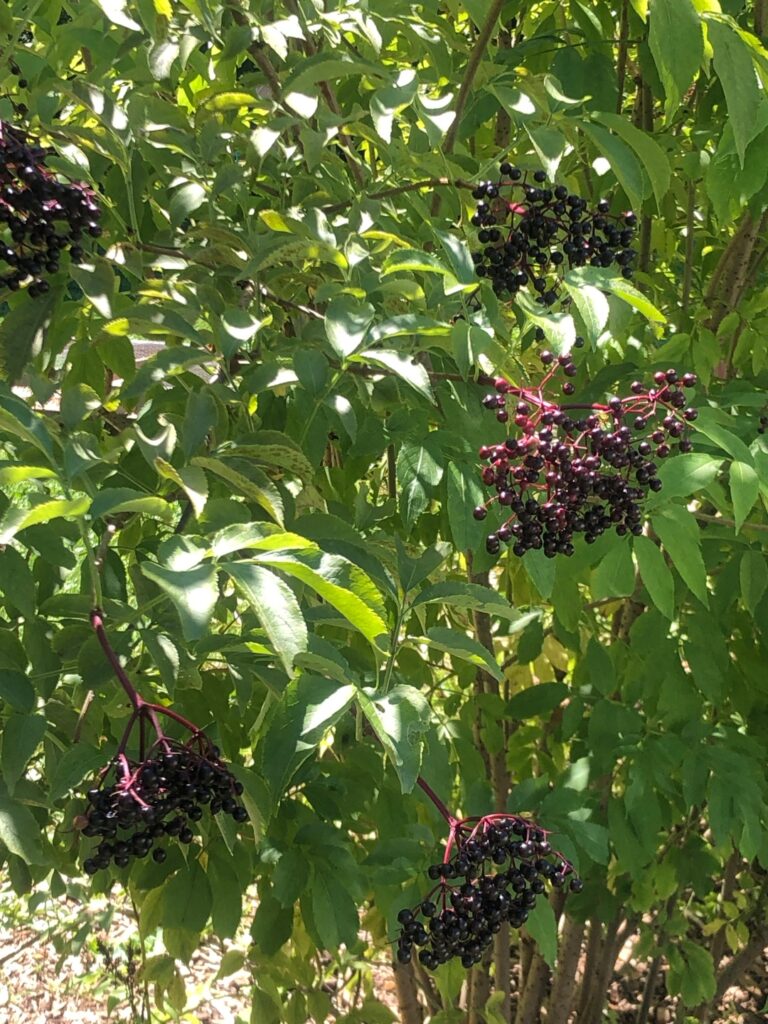
You can make so many drinks with elderberries, such as Black Elderberry Lemonade. There are baked goods and syrups to create out of elderberries, jams, fermented Elderberry honey, tinctures, and, of course, teas. Gardens that have beauty but easily picked food is so handy.
So, have you found your new favorite edible to add to your landscape? There sure are a lot of interesting edible plants to research. Maybe you have a few that I have left out. Please tell us what those might be in the comments below! We love to hear your opinions.
Leave a Reply